Purple Star Schools Are Expanding Nationwide: What Families Need to Know Before Their Next PCS
COMMENT
SHARE

ADVERTISEMENT
When a military family prepares to PCS, finding the right school is often the top priority. Many campuses proudly label themselves as "military-friendly" to show their support for military-connected students. But because there is no official government definition for the term, it can be tough for parents to know exactly what kind of resources to expect before they arrive.
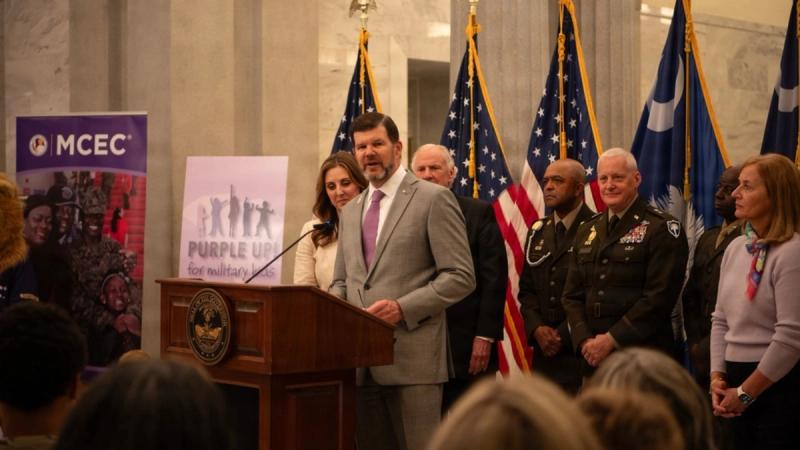
Now, a more defined path is gaining ground. Meet Purple Star Schools. Across the country, more campuses are earning the special designation, giving military families a recognizable place to begin when choosing a school during a PCS move.
A Designation With Structure Behind It
Purple Star Schools are issued by state education agencies, with published criteria that schools must meet to qualify. The North Carolina Department of Public Instruction requires schools to assign a military liaison and maintain accessible resources for military-connected students. The Texas Education Agency requires campuses to demonstrate how they support transitions and serve military families at the school level. Those requirements create a foundation that other schools can model.
PCS Readiness Assessment
Find out how prepared you are for your upcoming PCS move. Answer these questions to identify what you still need to do before moving day.
18 questions • Takes about 2 minutes
They exist because military-connected students don’t move like everyone else. The Military Child Education Coalition has documented that these students move frequently across their K–12 years, often encountering gaps tied to curriculum differences and timing. Purple Star doesn’t eliminate those challenges, but it does signal that a school has taken steps to prepare for them, and when you’re the new family in town, that makes a big difference.
There is no single national model ensuring continuity in implementation across every campus. State guidance and nonprofit reporting both note that how schools build on the designation can vary. Some develop strong systems around it. Others focus on meeting the required baseline. You won’t see that difference until your kid is already behind.

Nobody Prepared You for Military Life
But we can help. Join over 100k spouses already getting the advice, resources, and military tea they need to thrive.
The Federal Framework Working Alongside It
Alongside state designations, there is a federal framework guiding how schools handle military-connected students. The Interstate Compact on Educational Opportunity for Military Children sets expectations for enrollment, placement, attendance, and graduation. Schools are required to accept unofficial records, place students in courses aligned with prior coursework, and support on-time graduation when possible.
Those protections follow the student, but the school still has to know what to do with them. A district can comply with the Compact on paper and still struggle to execute a smooth transition in practice. Small delays add up, and by the time they’re noticed, schedules are already in place, and the struggle is already real.
Where Other Designations Fit
Purple Heart designations also appear in some school systems and universities. These are tied to recognition programs associated with the Military Order of the Purple Heart, honoring institutions that support combat-wounded service members and their families.
They reflect commitment and recognition, but they are not designed as a system-wide framework for managing student transitions across frequent moves. Though they both sound very much alike.

What Families Can Take From This
As Purple Star Schools expand, they are giving military families something more concrete to work with. They also give families somewhere to start, but they shouldn’t expect all the answers.
From there, the details still matter. How records are reviewed, how placement decisions are made, and how quickly support connects to the student. Those are the pieces that shape how a transition feels in real time.
Some schools are ready for that moment before the first day. Others take time to catch up. The Purple Star designation helps families learn the difference more quickly.
ADVERTISEMENT
The System Is Becoming Easier to Read
There is still no single national standard tying everything together for military families on the move. State programs like Purple Star, federal policy through the Interstate Compact, and local implementation all intersect. What is changing is visibility.
More schools are identifying themselves through defined criteria. More families are learning what to look for. With each PCS move, that knowledge carries forward and makes the process a little smoother.
Continue Reading

TRICARE Coverage of GLP-1s: Here’s What Military Families Need to Know
Health & Fitness
TRICARE Network Changes Are Leaving Some Military Families Without Their Doctors
Health & Fitness

Which Military Bases Actually Have DoDEA Schools? The Answer That Trips Up PCS Plans
Education
Join the Conversation

BY NATALIE OLIVERIO
Veteran & Senior Contributor, Military News at MilSpouses
Natalie Oliverio is a Navy Veteran, journalist, and entrepreneur whose reporting brings clarity, compassion, and credibility to stories that matter most to military families. With more than 100 published articles, she has become a trusted v...
- Navy Veteran
- 100+ published articles
- Veterati Mentor
ADVERTISEMENT



ADVERTISEMENT
