What Spouses Want the Military Spouse Commission to Address (And What They Feel Needs to Change Now)

ADVERTISEMENT
I went to every town hall I could. I spent hours in housing offices trying to get someone to listen to the problems we were having with our home. I was on the phone with the finance office constantly, trying to figure out why our pay wasn't right and how we were supposed to buy groceries after they took out our BAH. Honestly? It felt like a nightmare.
I remember thinking, this is supposed to be a positive way of life? This is what my parents put up with for more than 20 years? This can't possibly be what military families are expected to live with. Yet, here we are.
If the Military Spouse Commission had existed back then, I can only imagine what might have been different. Maybe some of the problems we ran into would have already been fixed. Maybe families today wouldn't still be fighting some of the same battles. That's the frustrating part.
Military spouses have been talking about these problems for years. We've filled out surveys. We've attended town halls. We've emailed our representatives. We've sat through meetings and told leadership what isn't working.
Now that the Military Spouse Commission has been established, many of us are holding onto hope that this time, someone is actually listening. The reaction across the military spouse community has been pretty consistent: It's about time.
But there's another question sitting right behind that one: Are they actually going to listen to what we're saying we need? Military spouses don't need another report explaining that military life is difficult. We know. We live it.
We need changes that actually make our lives easier. So, we asked military spouses what they want the Military Spouse Commission to address and, more importantly, what they believe actually needs to change.

What Is the Military Spouse Commission and Why Now?
The commission was created to look at some of the biggest issues affecting military families, including housing, employment, healthcare, education, childcare, and deployment-related support, and then recommend practical solutions. The intent is for them to be our voices, identifying where current policies and programs are falling short and recommending realistic changes.
That's a lot to tackle.
The commission is scheduled to operate for only two years, ending in August 2028, unless that timeline is extended. Two years sounds like plenty of time, until you've been waiting decades for something to change.
So why now?
As military spouses, we have been talking about these problems for years; however, most of us feel unheard. The commission creates an opportunity to turn that feedback into something more than another list of problems. The question now is whether military spouses will actually see their voices reflected in what comes next.
Here are the issues that kept coming up, and what military spouses had to say.

Nobody Prepared You for Military Life
But we can help. Join over 100k spouses already getting the advice, resources, and military tea they need to thrive.
The Core Issues (What Spouses Are Saying Needs to Change Now, Not Later)
What military spouses are most concerned about
Employment and pay lead, followed by a three-way tie across childcare, housing allowance and dependent education. Every issue on the list is a household-economics issue.
1. PCS Moves: Address the Ripple Effect of Military Relocations
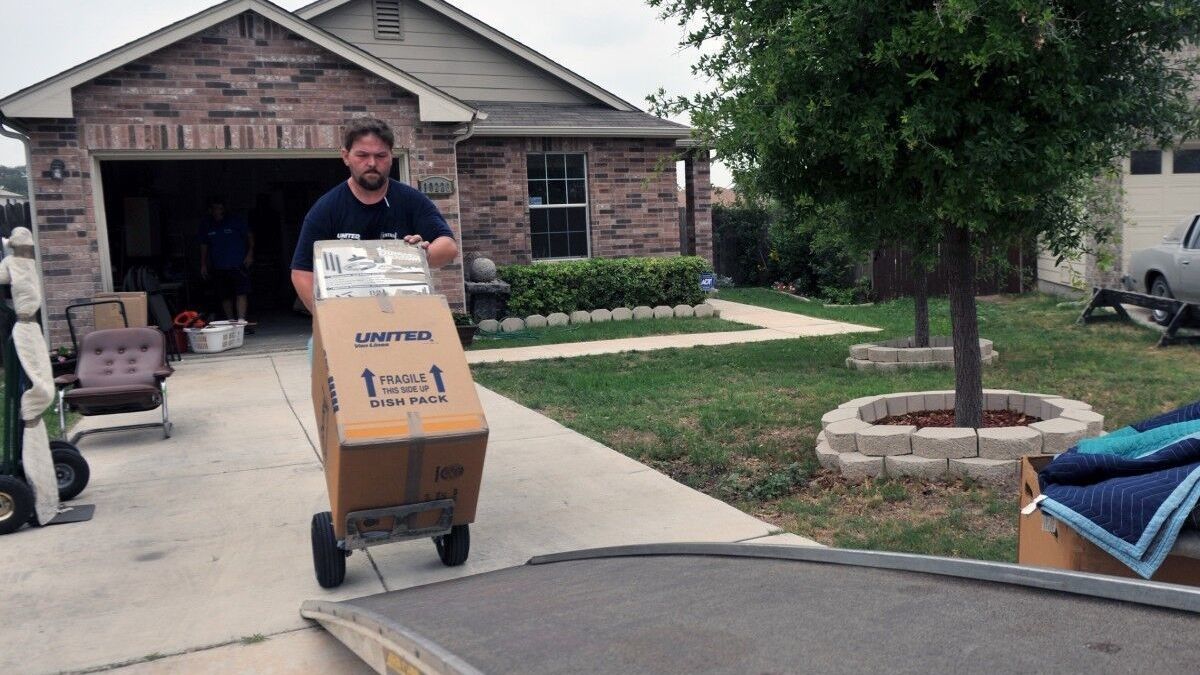
Military families move. We all know that going in. What we don't necessarily understand until we’ve done it is how much of our life gets packed into that move. A PCS isn't just loading a truck and driving to a new ZIP code.
It's finding a house, a school, childcare, a doctor, etc. It’s transferring prescriptions, updating addresses, figuring out a new commute, trying to get your career started again, trying to figure out where the grocery store is while simultaneously wondering whether your household goods are ever going to show up (and if they’ll show up as you left them).
Surveys suggest that roughly 40% of military families report experiencing unreimbursed out-of-pocket expenses exceeding $1,000 during their last move, with many spending well over $3,000. As spouses, we spend countless hours measuring floor plans, praying the 6-foot hutch and extended beds will fit in base housing, only to arrive and find our household goods (HHG) delayed by a month.
When families arrive at high-cost duty stations, the pressure starts immediately. The pressure especially starts to compound when you experience hurdles such as your BAH getting stuck at your old, lower-cost mainland rate, while privatized housing automatically pulls the higher local rate from your account anyway. Add in delayed or unapproved TLA and TLE payouts, and families are forced to absorb thousands of dollars in out-of-pocket debt.
One anonymous military spouse recently dealt with a similar scenario:
“Housing waitlists, especially overseas, are incredibly long. We’ve been in a hotel for 45 days with no end in sight. They encourage us to look at homes off of the installation, but our BAH doesn’t come close to covering the costs. I really wish there would be a better system, structure, and understanding that military families struggle to get two incomes on top of finding housing that we can afford.”
A PCS is more than a change of address; it is a period when expenses can skyrocket with little warning while reimbursements and entitlements play catch up. Spouses are asking for the Commission to recommend clear, measurable service standards for the systems families rely on during a move. Families need to know exactly what to expect when they submit a legitimate claim.
A more family-centered system must include: clear processing standards for reimbursements, automatic status (legitimate, real-time) notifications, improved access to emergency assistance (not ones that make us feel guilty for using them), and tools that provide relief during a PCS (not more problematic, temporary “solutions”).
2. Military Spouse Employment: Fix the PCS-to-Unemployment Pipeline
Most military spouses have all been there at one point or another. Staring at a "position closed" email after painstakingly applying for a federal job you are wildly overqualified for. Survey data shows that 23% of civilian spouses in the labor force are unemployed, and 70% of working spouses are underemployed.
It’s an alarmingly high statistic. Especially when most families are searching (and need) two incomes to survive.
Military spouses aren’t asking for another resume-building seminar or networking job fair. We have those at every installation. We’re asking for structural accountability that protects our careers when the military forces us to move.
While programs like Military Spouse Preference (MSP) exist, federal agencies often bypass qualified spouses because compliance seems discretionary. Career continuity for military spouses requires portable remote work. Federal agencies and government contractors must lead by example, establishing blanket remote work policies during a PCS so spouses don't have to resign every two to three years.
For professions that are unable to work remotely, the Servicemembers Civil Relief Act (SCRA) improved portability for fields like nursing and teaching. However, despite this move forward, many professionals still face red tape from licensing boards, processing delays, and fee hurdles.
One anonymous spouse shared after years of struggling in her field:
“I’ve been chasing and working hard at my nursing career for over a decade. Every time we PCS, I’m starting over. Yes, I appreciate the licensure reimbursement; it helps our family financially recover in one aspect of our moves. What isn’t considered is when I can’t get hired because they see gaps in my resume every three to four years, or when my work history doesn’t align with a company because I haven’t had enough ‘experience.’”
Military spouse employment has been studied extensively. The next step is to determine whether the programs already intended to address those challenges are producing meaningful results. Therefore, the commission should focus on tangible metrics, such as the number of eligible spouses hired, time to employment after a PCS, and whether spouses can remain employed through multiple moves.

ADVERTISEMENT
3. Childcare: Solve the Crisis for Military Families
One major issue that spouses want the Military Spouse Commission to address is the lack of accessible, affordable, and reliable childcare.
According to a 2026 Blue Star Families survey, 68% of respondents agreed that having two incomes is vitally important to their family's financial well-being. 86% of respondents cited high childcare costs and 67% cited long waitlists and/or a lack of spaces among childcare challenges.
Off-base childcare isn't always a simple solution. Military families sometimes have to turn to civilian providers, only to find themselves waiting for approvals while paying the full cost of care themselves.
Expanding CDC capacity isn't just about adding more buildings. It’s also about paying attention to who will care for our kids.
Jenny, a military spouse of 15 years, explained,
“My children already have enough change every 3-4 years; I want their care to be stable. CDC worker turnover is too fast for my liking. I'd rather budget hard and keep my kids at home with me in a stable environment. It’s hard on our bank account, but better for their emotions.”
Childcare is an employment issue, as well as a financial issue. The commission should recommend any of the following: measurable standards for childcare waitlist and fee-assistance processing, greater transparency around available childcare capacity, faster communication regarding waitlist status, and expanded options for families who cannot access installation-based care.
4. Healthcare Reform: TRICARE Accessibility and Dependent Coverage
Having TRICARE doesn't necessarily mean getting the care you need when you need it. Military families know this one well.
According to findings from the Military Family Advisory Network (MFAN) Health Care and Telehealth Research Report, active-duty families are overwhelmingly dissatisfied with their ability to secure timely appointments and specialized care.
Generally, for many, it looks something like this:
You find a provider who accepts TRICARE. You find out they're not taking new patients. You finally find someone who is accepting new patients, but then the appointment is months away.
Need a specialist? Now you get to start the process all over again. And the timeline to actually get a referral to that specialist oftentimes feels like a joke. And now it’s time to PCS, again.
For many families, it’s a never-ending cycle. One that needs to be addressed immediately.
L. McCarty, a long-time military spouse who spent nearly a decade living on base in a rural area, noted,
“We lack available healthcare (specifically specialty care) in rural areas like where our military base is located. There’s got to be a way to incentivize civilian healthcare providers to actively provide services to military families.”
Military families don't expect every duty station to have every medical specialty, but they do expect the healthcare system to help them navigate the transition. Recent Government Accountability Office findings show that TRICARE's Extended Care Health Option coverage limit has remained at $36,000 per enrollee per year since 2009. GAO has also previously identified problems with TRICARE provider directories listing doctors who aren't actually accepting beneficiaries.
Spouses are calling for the commission to recommend measurable access standards for military healthcare that look at the experience from the family's perspective. This includes guidelines on how long families wait for appointments, assurances that specialty care is available within a reasonable distance, and referrals that have an improved processing timeline.
Having TRICARE is the first step, not the last. Care only arrives after a chain of six conditions holds — and a break anywhere in it looks identical to being uninsured.
5. Privatized Housing: Holding Military Housing Companies Accountable
Let's talk about the roofs over our heads. Or, more accurately, the roofs leaking over our kids' beds.
A Change the Air Foundation survey of 3,401 service members and families living in privatized housing found that nearly every service member surveyed (97%) reported at least one significant and dangerous issue with their military-provided housing. The survey found that the most commonly reported problems included mold, mildew, or other microbial growth, temperature or humidity issues, water damage, pest infestations, and HVAC failures.
Military spouse Samantha Miszler from Fort Rucker, AL, experienced the long-term effects of these conditions:
“Leaving Fort Rucker to Fort Campbell, we were excited for a new home. Little did we know so many issues in our home had been covered up. Within months of moving in, my dogs suffered; I suffered in our new home. I almost went blind after suffering 12 corneal abrasions. My children had puffy red faces and dark circles around their eyes. My youngest’s febrile seizures began, and housing management kept saying our “home was completely fine.” Multiple mold tests, doctor's appointments, and meeting with Garrison, and we were finally moved to a new home - and what do you know, the symptoms all but disappeared.”
Approximately 99% of family housing on U.S. military installations is owned or operated by private companies. The Department of Defense already has tools available to hold privatized housing companies accountable, yet GAO has found continued oversight gaps.
Military spouses are calling for the commission to implement more consistent standards for housing inspections, mold remediation, and public reporting of housing performance. In addition to these aforementioned standards, there must be severe, binding financial consequences when housing operators repeatedly fail to address serious health or safety concerns.

ADVERTISEMENT
6. Deployment Ready: Bases Need to Provide More Meaningful Deployment-Related Support
Deployment brings a very specific kind of exhaustion. You become the parent who handles every midnight wake-up. You're the one who gets the call from the school. You're the one taking the kids to appointments, fixing whatever broke in the house, and trying to remember what day it is. Somewhere in the middle of all of that, you're supposed to keep your own career going, keep the kids okay, and take care of yourself mentally and physically.
For the families at home, survival shouldn't depend on navigating a maze of bureaucratic red tape. We already know respite care can help. When you haven't had a break in months, finding a few hours of childcare shouldn't feel like a second job.
We also have to stop treating military spouses as an endless supply of free labor. Too often, FRGs rely heavily on unpaid spouses who already carry the demands of military life.
A 2025 report from the Association of Defense Communities takes a harder look at that reliance, noting that military spouses are still asked to provide unpaid support through unit programs. The report also raises an important distinction: there is a difference between volunteering for a community you care about and effectively providing unpaid support to an organization as large as the Department of Defense.
Do we want an FRG that understands exactly what we’re going through? Yes. Do military spouses who run FRG programs agree that in order to keep these groups going, they need more support (both financially and professionally)? Also yes. We want community care, not exploitation disguised as tradition.
Nearly half of military spouses have seen a counselor
This is not a small or occasional need. Spouses are using mental health care at scale — and asking, specifically, for better access to providers at every base.
Will the Commission’s Two-Year Timeline Produce Results?
The Commission's two-year timeline is short, especially for problems that have been around for decades. Some changes may happen through the Department of Defense; others will require Congress. Some will involve states, employers, schools, or private companies.
That's okay.
What isn't okay is spending two years studying problems military spouses have already explained over and over again, only to end up with another report telling us what we already know. We've already told you what hurts. We've already told you where the system breaks down. We've already told you what happens to families when the pieces don't work together.
Now we want to see what happens next. This isn't really about creating the perfect military family experience. We know that's not happening. Military life will involve deployments. We're going to move. Plans are going to change. Kids will have to say goodbye to friends. Spouses are going to have to rebuild careers. That's the nature of this life.
But there is a difference between accepting the sacrifices that come with military service and accepting systems that make those sacrifices unnecessarily harder.
Military spouses aren't asking for special treatment. We're asking for systems that work. We're asking for our careers to matter. We're asking for our kids to have reliable childcare and stable schools. We're asking for healthcare we can actually access. We're asking for safe homes. We're asking for PCS moves that don't put families into debt. We're asking for support during deployments that doesn't depend on one exhausted spouse volunteering to hold everything together.
We're asking for someone to actually do something with everything we've been saying for years. The Military Spouse Commission has two years to listen, investigate, and recommend. Military families have been waiting a lot longer than two years for some of these problems to change.
Milspouses.com reached out to the Military Spouse Commission for comment regarding what they plan to accomplish in the next two years and did not hear back before publication.
Continue Reading
The Military Is Asking Spouses to Speak Up, but Will It Actually Change Anything?
Spouse Benefits
Military Spouses Say PCS Isn’t Getting Better. Now They’re Comparing It Across Generations
PCS Advice

What’s Next in Military Spouse Employment? Upcoming Shifts in 2026
Spouse Benefits
Join the Conversation

BY JESSICA GETTLE
Military Spouse & Family Life Writer at MilSpouses
BY JESSICA GETTLE
Military Spouse & Family Life Writer at MilSpouses
Jessica Gettle is a military spouse of more than a decade, part of the EOD community, and a communications professional with 10 years of experience. She combines her career expertise with a deep, personal understanding of the unique rhythms...
- Military Spouse
- SEO content writer
- Experience with deployments and relocations
ADVERTISEMENT


ADVERTISEMENT