What Happens to Military Kids During Deployment and How Parents Hold the Line at Home

ADVERTISEMENT
Mom lingers in her child’s doorway longer than she means to. The light is already off, but her child isn’t fully asleep, just quiet in that way that signals something is still working on her mind, underneath the surface. As her mom comes back in, one more time, and smooths the blanket to tuck her in, she finally asks out loud, “Is Dad going to be okay?”
The question isn’t new, but the reason she’s asking is different. It carries more weight, and less curiosity, and more calculation; as if the same thought has tossed and turned through her mind enough times to feel real. Her mom answers the way she has learned to… steady, grounded, and careful not to promise more than she can. She explains that Dad is trained, and that he’s not alone, and reminds her that if anything changes, she’ll let her know.
The words land, maybe not perfectly, but enough for now. Her child still wrestles slightly, the tension easing just enough for sleep to take over. She knows that even though her daughter is sleeping, those questions tossing around in her mind aren’t going anywhere anytime soon. They will keep coming back, they always do - they just change shape and shift from time to time, but until the answer is real enough to hold on to, those questions will keep coming back.
The Behavior Shifts Before Anyone Calls It What It Is
The changes rarely happen in a way that demands immediate attention. More often, they settle into the edges of the day, into little disruptions that don’t feel connected until they begin to compound and repeat. Sleep becomes uneven, mornings stretch longer than they used to, and a teacher mentions a drop in focus, maybe not dramatically, but enough to notice. Routines that used to be easy start to require more effort than they should.
Over time, those small changes begin to accumulate. Studies of military families published in pediatric and behavioral health literature have found that children experience increased anxiety, irritability, and behavioral disruption during deployment, particularly when separation is prolonged. These patterns don’t show up all at once. They build gradually, reshaping how a child moves through their day before anyone fully recognizes or names what’s happening.
What often looks like a distraction or an attitude is likely something else entirely. It could be a child allocating more internal energy toward managing uncertainty than they’ve had to before. You begin to notice hesitation where there used to be ease, questions that repeat even after they’ve been answered, and a subtle but persistent shift in how steady things feel. It doesn’t look like a breaking point; it looks like accumulation, but at any given moment, it can definitely feel like one.


Nobody Prepared You for Military Life
But we can help. Join over 100k spouses already getting the advice, resources, and military tea they need to thrive.
What Looks Like Regression Is Often a Child Trying to Regain Control
When children begin reaching for things they’ve already outgrown, it can feel like something is moving backward. A child who once fell asleep independently now needs you to sit at the edge of the bed again. One who typically moved confidently through the house starts staying closer, clingier, and asking for reassurance in moments that never required it before.
Our development under stress isn’t always predictable and doesn’t move in a straight line. Guidance from the Department of Veterans Affairs notes that younger children in military families often respond to deployment with increased dependency and proximity-seeking behaviors. It is important to know that these responses are not setbacks. They are adaptive efforts to restore a sense of safety when the environment no longer feels predictable for them.
It doesn’t mean children are losing skills, though; for parents, it can feel that way. What’s actually happening is that children are prioritizing regulation. They’re figuring out what works for their nervous system in real-time. When uncertainty increases, they return to patterns that have worked before: closer proximity to their parents, repeated routines, and familiar interactions.
Parents can feel the shift when their child’s needs are met instead of resisted. Maybe you notice it on the night you stay a few minutes longer and their body softens into peaceful sleep, or the moment the repeated question finally stops; not because it was finally answered, but because it has been answered consistently, in a way that feels reliable.
What allows children to move forward again isn’t pressure to return to where they were. It’s the accumulation of enough safe moments that those behaviors are no longer necessary.
Fear Doesn’t Announce Itself; It Hides in the Questions Kids Ask
Children rarely say they’re afraid; they ask questions instead. Their questions may change shape, but the core stays the same. “Do people always come home?” becomes “What happens if something goes wrong?” then “Are you sure everything’s okay?” asked in a tone that isn’t really looking for new information, but for something steadier than the last answer.
The VA says that children of deployed service members often carry persistent concern about injury or death, even when those risks are not discussed directly. Their awareness expands faster than their ability to process uncertainty, which is why the same questions tend to return.
They are not asking for facts; they are asking for containment.
Research on childhood anxiety has shown that uncertainty, when left unstructured, expands. When it is met with consistent, grounded responses, it begins to settle. That doesn’t mean the fear disappears. It means it has somewhere to land.
Clinicians working with military families, including those through Talkspace, emphasize that repetition is part of how children regulate fear. They revisit the same questions because their understanding evolves over time. It doesn’t go away. It comes back, quieter some days, louder on others, until it learns where it can land safely.
Why the At-Home Parent Becomes the Emotional Anchor During Deployment
There is a point, often early in deployment, when the weight of the household shifts. Not just in responsibility, but in emotional gravity. The parent who remains becomes the center through which everything moves, the schedule, the tone of the home, the way stress rises and settles. Children are highly attuned to this, often more than they are to what is explicitly said to them.
Research on military families has consistently found that caregiver stress directly influences child outcomes during deployment. Emotional regulation in children is not independent. It is relational. They borrow stability from the adult closest to them. That doesn’t require a parent to eliminate stress, or even attempt to. It requires giving stress a structure. Structures can be managed. What can be managed can be (somewhat) controlled.
Sometimes that looks like slowing your response just enough to keep your tone steady, even when your thoughts are racing. Sometimes it sounds like, “This is hard right now. I feel it too. But we’re okay,” spoken in a way that recognizes the moment instead of escalating it. Often, it lives in small consistencies that carry disproportionate weight, like routines that remain intact, expectations that stay predictable, and connections that show up even when energy is low.
For some families, those conversations and emotions don’t stay contained inside the home, and that isn’t failure. It’s how pressure gets distributed. The families who hold the line most effectively are not the ones who carry everything alone. They are the ones who have somewhere to put down what they’re holding down.
In recent years, access to that kind of support has expanded in ways that align with real military life. Platforms like Talkspace have made it possible for both parents and children to access consistent mental health support without stepping outside the rhythm of daily life. Not as an extra layer, but as reinforcement. When a parent feels even slightly more grounded, the shift for everyone in the family is immediate.

ADVERTISEMENT
When Holding It Together Starts to Slip
Maybe you’ve kept the same routines in place, but they don’t work the same way. You keep giving the same answers, but they don’t address the same questions. The effort required to maintain stability becomes more visible to our children. Not because anything has broken, but because so much more is being carried.
Research on prolonged stress in military families shows that without consistent outlets, both children and caregivers can begin to rely on more rigid coping patterns. More withdrawal, more reactivity, and less flexibility. Over time, that strain compounds. This is where the right level of support changes the game. When there is space for children to speak freely without filtering what they’re feeling, and space for parents to process without carrying everything internally, the system expands just enough to hold what it couldn’t before.
What Children Carry Doesn’t Reset When Deployment Ends
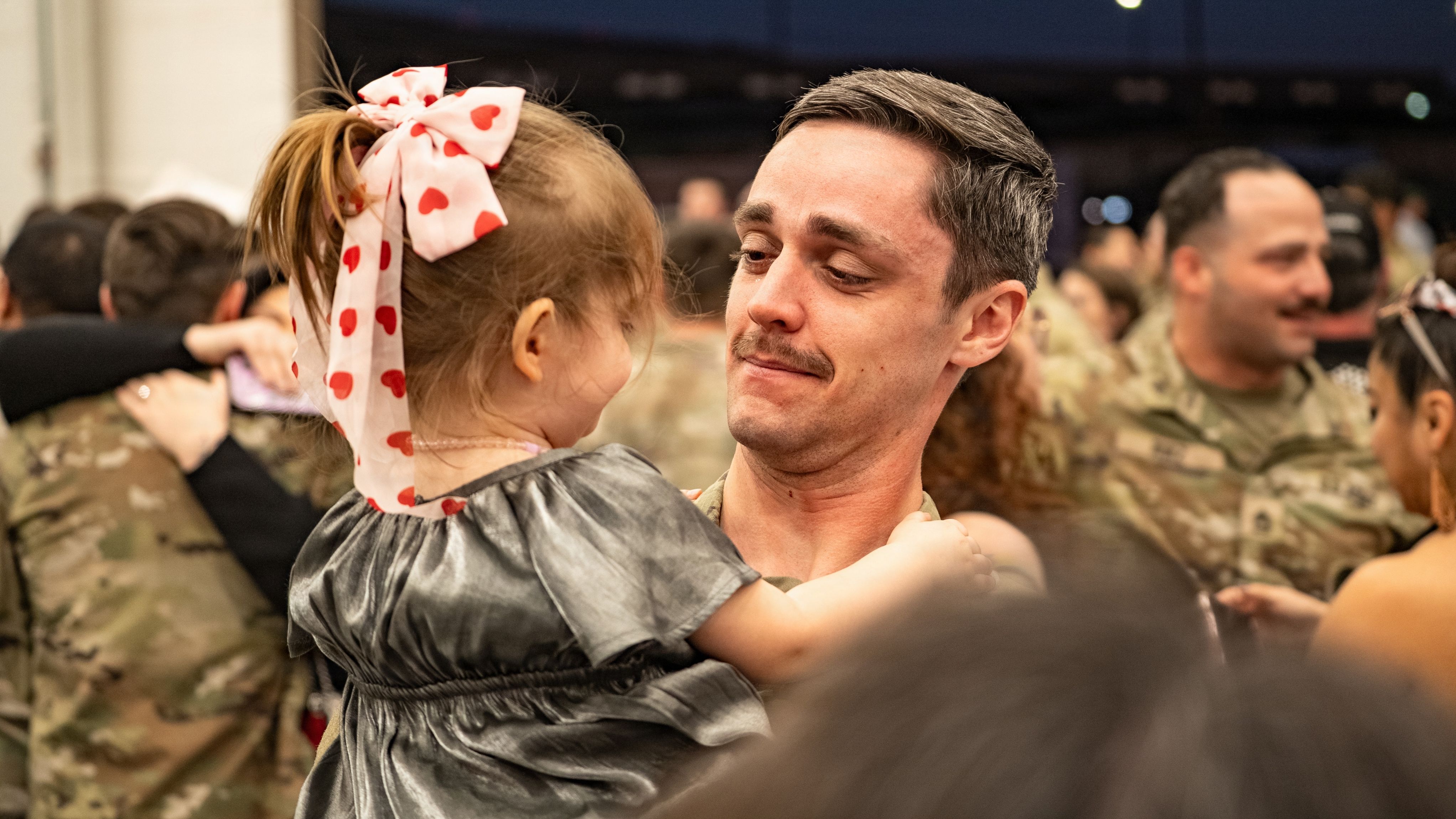
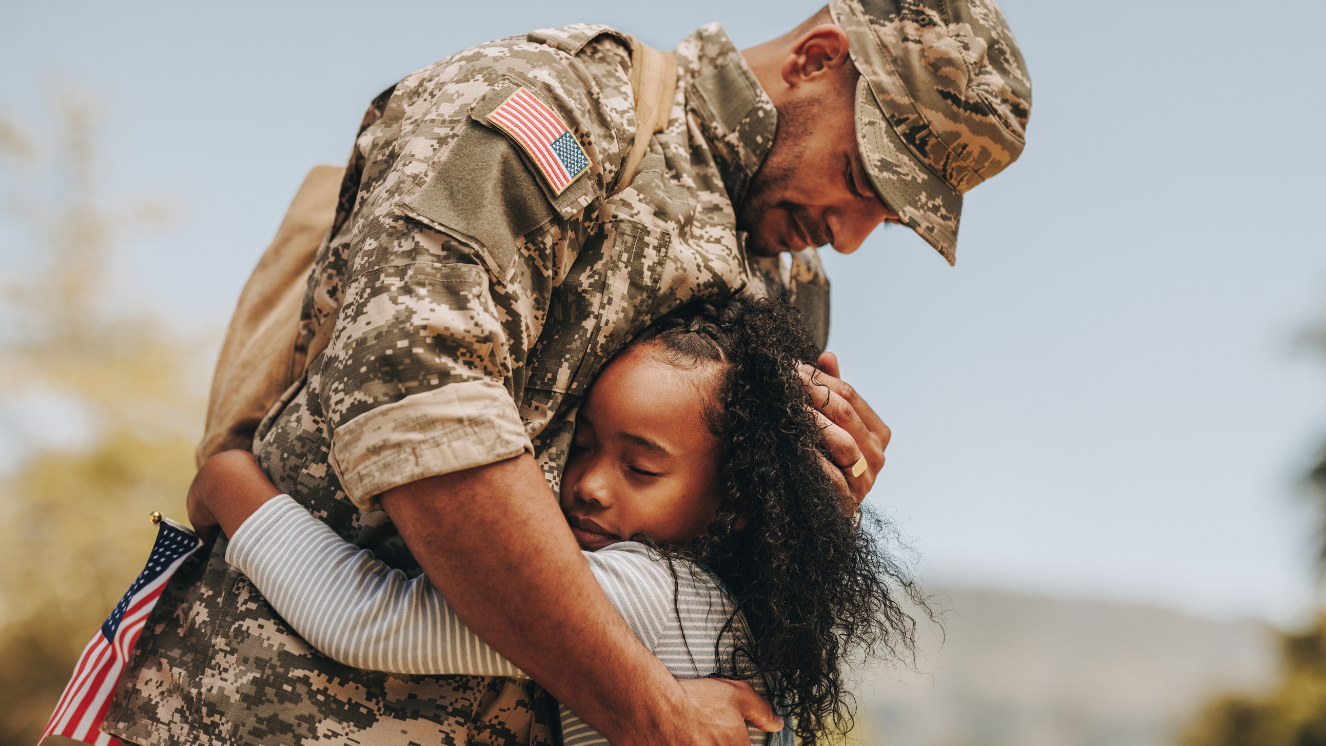
Homecoming does not erase what happened and what was felt during a parent’s deployment. It changes the shape of it. The routines that were held during deployment will adjust again. Roles recalibrate. Children who adapted to absence now have to readjust to presence. That transition rarely happens cleanly, because what was learned during separation doesn’t disappear on return.
Research on post-deployment military families has found that emotional patterns, heightened vigilance, anxiety, and withdrawal often persist beyond reunion. Not because something went wrong, but because those patterns served a purpose. These behaviors and awareness aren’t easy to shed once a service member is back at home. Many families say the return home is one of the most difficult aspects of deployment.
What shapes reintegration isn’t whether stress exists; it’s whether it had somewhere to go while it was happening. Families who maintained open communication, consistent structure, and access to support during deployment tend to move through this transition with more stability, not because they avoided the hard parts, but because nothing was left unaddressed long enough to harden the path to progress.
What Holds You Down When the Questions Keep Coming Back
Her mom is still standing in the doorway. The house has settled, but not completely. The question from earlier hasn’t disappeared; it just rests for now, folded into the rhythm of her child’s breathing as she sleeps.
Tomorrow, the worries and questions will come again. Maybe in a different form. Maybe sharper or softer, and while she still won’t have a better answer than she does right now, that’s not what truly matters. What matters is that when your child’s fear, or your own fear, rises to the surface, it doesn’t stay trapped inside your child’s mind, or yours. What matters is that the questions have somewhere steady enough to land, even without perfect answers.
Sometimes, finding that steady landing spot means reaching outside the four walls of your home. That's exactly where a resource like Talkspace can become an invaluable part of your rhythm. Because military life is inherently unpredictable, having flexible, anywhere access to licensed therapists means your support system can actually keep up with you.
Whether it's matching with a clinician who truly understands the unique cycles of deployment, finding a dedicated space for an older child to process their shifting world, or just securing a reliable outlet for the at-home parent to finally exhale, Talkspace offers a professional boundary for the heavy things you're all feeling.
What matters is that even in a house reshaped by distance, there are places where the weight can be shared, not just carried. Over time, that becomes the difference for military kids learning to live through deployment, not the absence of fear, but the presence of someone who makes sure it never has to be carried alone.
This article is a result of a collaboration with Talkspace.
Continue Reading
Age-Appropriate Ways for Military Families to Communicate About Deployments to Kids
Childcare
Military Parents: 4 Ways to Connect with Kids During Deployment
Relationship Advice

PCS Parenting Guide: Supporting Military Kids During Moves
PCS Advice
Join the Conversation

BY NATALIE OLIVERIO
Veteran & Senior Contributor, Military News at MilSpouses
Natalie Oliverio is a Navy Veteran, journalist, and entrepreneur whose reporting brings clarity, compassion, and credibility to stories that matter most to military families. With more than 100 published articles, she has become a trusted v...
- Navy Veteran
- 100+ published articles
- Veterati Mentor
ADVERTISEMENT


ADVERTISEMENT