WHY ARE SO MANY US MILITARY AIRCRAFT PAINTED GRAY?
COMMENT
SHARE

ADVERTISEMENT
When you look at any U.S. military aircraft, you will notice that almost all of them look the same, especially in color. Almost all of them are painted gray. They are not bright, not patterned, and, most importantly, they don’t stand out in the skies.
They don’t have bold designs. Military aircraft have muted gray tones that almost blend into the sky. You might think, “Why are they all gray?” That’s a fair question.
Normally, the color gray is not the first color you’d pick if you wanted to hide something in the sky, because the sky isn’t gray most of the time. The sky is blue and even black at night. So why are many military aircraft gray? Keep reading to find out!
What Did Military Aircraft Look Like During World War I?
It was during World War I that camouflage became universal for ground forces. This is because they were easily discovered on the ground when there were aerial threats. Even before specialized paint was used on military aircraft, the use of camouflage in the military’s uniforms most likely influenced its adoption.
Since the ground forces used camouflage, the military needed to experiment with which colors would be ideal for its aircraft. They initially used earthy tones for camouflage, like olive green, brown, and dark green.
The British, for example, relied heavily on PC10, while the Germans experimented with "sky gray" and eventually their famous printed "lozenge" camouflage. Gray was never the universal standard in this era. Despite this, one aircraft became famous for its combat record and color.
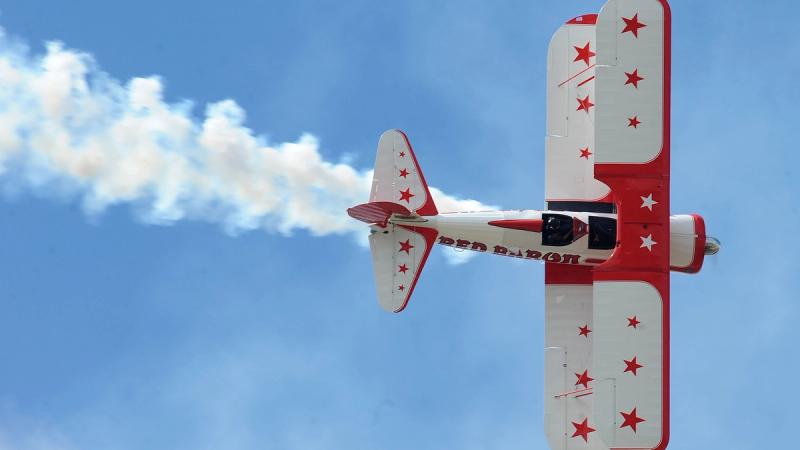
The Red Baron was considered the most successful fighter aircraft of that time. Richthofen’s aircraft were painted red after he became a leader to help his own pilots identify him in the air, which then evolved into a psychological weapon since it scared enemy pilots.
“The Red Baron’s red aircraft and other highly decorated aircraft of the flying circus obviously made the aircraft easily identifiable; it could also be seen as intimidating to the opposition. However, Austro-Hungarian ace Julius Arigi abandoned his highly decorative aircraft as he found that it drew the attention of the enemy,” according to an interview with the RAF (Royal Air Force) Museum.

Nobody Prepared You for Military Life
But we can help. Join over 100k spouses already getting the advice, resources, and military tea they need to thrive.
Why WWII Marked a Shift in Aircraft Paint Schemes
By the time World War II started, military aircraft had improved in speed, range, and altitude. As time progressed, everything about an aircraft has improved.
While it is easy to assume gray took over here, World War II was actually the peak of Olive Drab for the Army, Sea Blue for the Navy, and eventually, bare metal finishes. By 1944, the U.S. Army Air Forces realized that skipping the paint altogether saved weight and increased speed, giving us iconic unpainted silver aircraft like the P-51 Mustang and B-29 Superfortress.
Gray was primarily relegated to the undersides of aircraft (like Neutral Gray) to blend in with the sky from below.
According to the RAF Museum, “It would appear that the first all gray trial occurred in May 1941 when a PRU Mosquito at RAF Benson was painted with a Medium Sea Gray or Olive Gray scheme.”
“It proved very effective, but it felt that it would be difficult to introduce to an existing aircraft, as the workload of stripping, priming, and applying the new scheme would be too much work. The first gray scheme to be used operationally was in June 1943, when it was approved for use on high-level fighters, which included Spitfires, Welkin, and some prototype aircraft,” they added.
Why Are Military Aircraft Painted Gray?
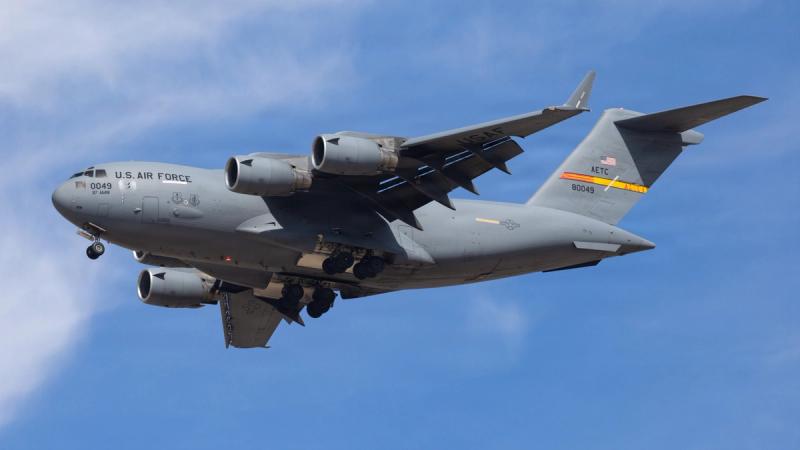
Using the color gray is the result of years of testing and changes as to how aircraft are used. They needed to blend in a change without making the aircraft invisible. It was initially applied to delay enemies from spotting them.
From there, the color gray became widely used because it performs well across a wide range of conditions, especially at higher altitudes.
“Gray was adopted for high altitude fighters on upper surfaces, as when viewed from above, the ground looked gray due to cloud or dust particles in the air below,” the RAF Museum noted.
By the Cold War, gray had started to become the preferred color for many U.S. military aircraft, especially those capable of operating at high altitudes.
The Tactical Paint Scheme (TPS) and Radar Absorbent Coatings
The goal of the military back then was to minimize detection as much as possible to improve chances of survival and combat effectiveness. Today, everyone can agree that it’s still the same goal, and today is actually the true "peak" of the all-gray aircraft.
However, paint alone doesn’t achieve reduced detection. It just plays an important role. Modern U.S. military aircraft use the Tactical Paint Scheme (TPS). This system employs specific shades of federal standard gray to break up the aircraft's silhouette against the horizon at a distance.
Furthermore, modern gray paint isn't just standard pigment. It often includes Radar Absorbent Material (RAM), like the "Have Glass" coating used on F-16s and F-35s, to actively reduce the aircraft's radar cross-section.
For modern aircraft seen today, their color might not always stand out, but that is exactly the point. Because sometimes, a smart technical choice is what keeps you from being seen. It does look plain, but in the air, when an aircraft is less noticeable, it provides fighter pilots with a perfect combination of safety and efficiency.
Read next:
Join the Conversation

BY ALLISON KIRSCHBAUM
Veteran, Military History & Culture Writer at MilSpouses
Allison Kirschbaum is a Navy Veteran and an experienced historian. She has seven years of experience creating compelling digital content across diverse industries, including Military, Defense, History, SaaS, MarTech, FinTech, financial serv...
- Navy Veteran
- 7 years experience in digital content creation
- Expertise across Military, Defense, History, SaaS, MarTech, FinTech industries
ADVERTISEMENT



ADVERTISEMENT
